Why Celebrity Scandals Always Seem to Drop While You're Asleep

Photo: PattayaPatrol, CC BY-SA 4.0, via Wikimedia Commons
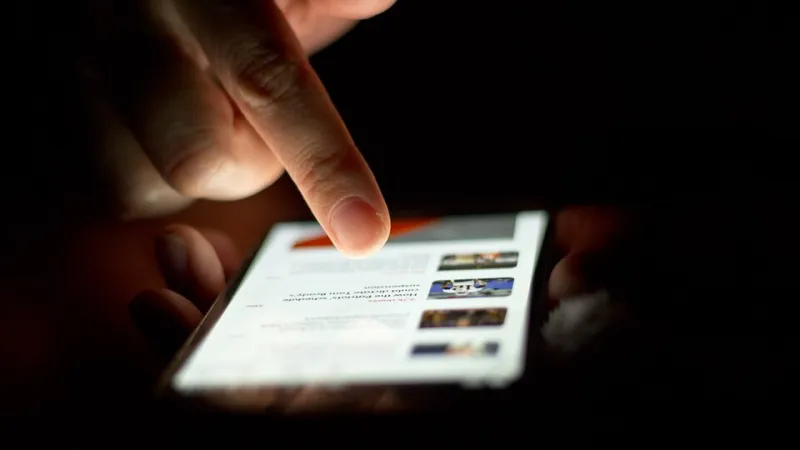
You roll over at 7 AM, grab your phone, and within thirty seconds you're three posts deep into a celebrity feud that apparently exploded overnight. Everyone's already reacting, the takes are fully cooked, and you feel weirdly late to a party that started without you. Welcome to the modern celebrity news cycle — a machine that runs around the clock, across every time zone, and never waits for a convenient hour.
This isn't an accident. The way entertainment news spreads today is the product of deliberate strategy, global media fragmentation, and an internet that genuinely does not sleep.
The World Doesn't Run on Eastern Time
Here's the thing most American fans don't fully register: while the US entertainment industry is obviously massive, it's not the only engine running. UK tabloids, Korean entertainment portals, Australian gossip sites, and Japanese fan communities are all actively producing and consuming celebrity content at hours that don't line up neatly with New York or Los Angeles.
When a story breaks in London at 9 AM GMT, that's 4 AM Eastern. By the time a typical American fan wakes up, the story has already been picked up, screenshotted, quoted, misquoted, and turned into a meme. The US audience doesn't catch the story at its origin — they catch the echo.
This is especially true for anything involving British royals, K-pop acts with massive American followings, or international film festivals. The Cannes red carpet drama you saw trending at 6 AM? That was old news in Paris hours before your alarm went off.
PR Teams Know Exactly What They're Doing
Here's where it gets genuinely interesting. The fragmented time zone landscape isn't just something publicists deal with — it's something they actively exploit.
Strategic timing in celebrity PR is nothing new, but the playbook has gotten more sophisticated. Dropping a statement, a response, or even a controversy at a specific hour can dramatically shape how the story lands. Release something at 11 PM ET on a Friday and you're burying it — the news cycle moves fast, the weekend kills momentum, and by Monday it's already old. But drop something at 4 AM ET and you're actually hitting peak engagement in the UK, early-morning scroll time in Australia, and you're pre-loading the US news cycle to wake up already primed.
Publicists and crisis managers openly talk about the "overnight drop" as a controlled detonation. You set the charge, step back, and let the international markets do the initial amplification. By the time American entertainment journalists arrive at their desks, the story already has global context, early reactions, and a narrative shape — one that the PR team often had a hand in crafting through strategic leaks to specific outlets.
Label drops, film casting announcements, and even breakup confirmations follow similar logic. The goal isn't always to break news — sometimes it's to manage the temperature of a story by controlling when it hits its biggest audience.
Multiple News Cycles in a Single Day
What's wild about the current landscape is that a single celebrity story can essentially go through multiple distinct news cycles within 24 hours. Think about how an awards show result plays out now.
The ceremony might air live on the West Coast at 8 PM PT, which is already 11 PM ET. But global audiences are watching via stream, and international entertainment sites publish results in real-time. By the time the after-party photos drop, it's deep into the early hours on the East Coast. Morning shows pick it up at 7 AM, social media hits a second peak around noon, and then a third wave hits when evening audiences in Europe catch their version of the recap.
For fans, this creates a genuinely fragmented experience depending on when you're tuned in. Early risers catch the raw reaction phase. Midday scrollers get the analysis and hot takes. Evening viewers get the retrospective and the backlash to the backlash. Same event, totally different emotional texture depending on your entry point.
Catching Up vs. Living It in Real-Time
This is probably the biggest shift in how Americans experience celebrity culture right now. There used to be a shared national moment — everyone watched the same award show, read the same morning paper, caught the same evening entertainment segment. That's essentially gone.
Instead, fans increasingly fall into two camps: those who catch stories in real-time (usually meaning they're up late, extremely online, or in a different time zone) and those who catch up on the highlights after the fact. Neither experience is wrong, but they're genuinely different.
Real-time fans get the raw, unfiltered version — the first reactions, the messy speculation, the live chaos of a developing story. Catch-up fans get a more curated version where the narrative has already solidified, the key screenshots have been selected, and the discourse has been partially resolved. Platforms and media outlets are increasingly designing content to serve both groups, which is why you see so many "everything you missed" roundups published specifically for morning audiences.
Why This Actually Matters for Fan Culture
Beyond the mechanics, there's a real cultural consequence to all of this. The sense of shared, simultaneous experience that used to define big celebrity moments is increasingly rare. When a major scandal breaks at 4 AM ET, the fans who were awake for it have a fundamentally different relationship to the story than the fans who read about it over breakfast.
That divide shows up in fandom dynamics — online communities where the "I was there when it happened" crowd sometimes talks past the people who caught up later. It shows up in the way discourse evolves: a take that felt reasonable at 4 AM might look completely different once more context surfaces by noon.
For anyone who's ever felt weirdly out of the loop despite being a devoted fan of someone, this is why. The clock is always running, the news machine never pauses, and celebrity culture now operates on a truly global schedule that doesn't particularly care about your sleep habits.
At Rrota24, we kind of love that chaos. The entertainment world moving around the clock means there's always something happening, always a new angle to catch. But it's worth understanding the machinery behind it — because a lot of what feels like organic, spontaneous celebrity drama is actually timed, targeted, and rolling out exactly according to plan.