Hooked by Design: The Hidden Tricks Platforms Use to Keep You Watching at 2 AM

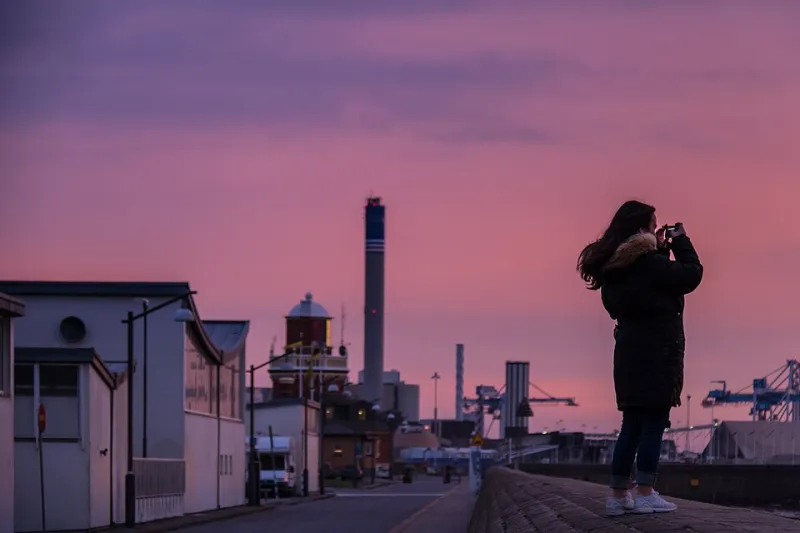
Photo: Etan Doronne, CC BY-SA 3.0, via Wikimedia Commons
It's 1:47 AM. You've got work in six hours. You told yourself you'd stop after the last episode ended, but somehow the next one is already playing — and you're already three minutes in. Sound familiar? That's not a coincidence, and it's definitely not a personal failure. It's the product of millions of dollars in behavioral research, A/B testing, and some of the most sophisticated user-retention engineering ever built.
Welcome to the 24-hour content cycle trap.
The Machine That Never Sleeps
Streaming platforms and social media apps weren't just built to entertain you — they were built to keep you. There's a meaningful difference. One serves your needs; the other serves the platform's quarterly engagement metrics. And the tools they use to blur that line are far more deliberate than most people realize.
Former Netflix UX designer Evan Torres (name changed at his request) described it plainly in a conversation with Rrota24: "Every single default setting on that app was tested against retention data. The autoplay timer, the preview thumbnails that start playing the second your cursor hovers — none of that is neutral. It's all pointing you toward more."
That "more" doesn't stop at bedtime. In fact, platforms have specifically optimized for late-night users, who behavioral data shows are more impulsive, less likely to close an app, and more emotionally susceptible to cliffhanger storytelling.
Autoplay: The Quiet Villain
Autoplay is probably the single most studied and most criticized retention tool in the streaming playbook. Netflix introduced its countdown timer in 2012 — that little "Next episode plays in 15 seconds" clock — and the company has publicly acknowledged it reduced the effort required to keep watching. What they've been quieter about is why that matters so much at night.
Dr. Priya Mehta, a behavioral psychologist at UCLA who studies digital consumption patterns, explains it this way: "Decision fatigue is real, and it peaks in the evening. By nighttime, your prefrontal cortex — the part of your brain that handles impulse control and long-term thinking — is running on fumes. Autoplay removes the decision entirely. You don't choose to keep watching. You just... don't stop."
That's not a small distinction. It's the difference between active enjoyment and passive consumption — and platforms have built entire ecosystems around the latter.
Notifications That Know You Too Well
Push notifications have become one of the most aggressively tuned tools in the engagement arsenal. It's not just about reminding you that a new season dropped. Modern notification algorithms are trained on your personal viewing history, time-of-day behavior, and even how long you typically wait before opening an alert.
Spotify, TikTok, YouTube, and most major streamers now use what industry insiders call "behavioral windowing" — sending alerts during the specific hours you've historically been most active. If you binged a show every Friday night after midnight for three weeks, the platform knows that. And it will ping you at 11:58 PM on a Friday with something it thinks you can't resist.
"The goal isn't just to remind you they exist," Torres said. "It's to catch you at the exact moment your resistance is lowest."
Cliffhangers as a Business Model
Let's talk about the writing. Because it's not just the tech — the content itself is engineered for the cycle.
Peak TV's golden era gave us prestige storytelling, but it also quietly normalized the season-long cliffhanger as a standard narrative device. Shows built for streaming don't just end episodes on unresolved tension — they structure entire seasons around a single unanswered question, making the "stop point" feel almost impossible to find.
Dr. Mehta calls this "narrative debt." "When a story leaves a loop open, your brain genuinely cannot fully relax until it's closed. That's not metaphorical — it's neurological. Platforms and writers know this. The cliffhanger isn't just a dramatic tool anymore. It's a retention mechanism."
And in the always-on world of streaming, where entire seasons drop at once, there's no enforced stopping point — no week-long wait to reset. The next hit of narrative resolution is always exactly one click away.
What It's Actually Costing You
The real-world fallout from all this is well-documented, even if platforms aren't exactly leading the conversation about it. The American Academy of Sleep Medicine has repeatedly flagged "revenge bedtime procrastination" — the phenomenon of staying up late to reclaim personal time — as a growing public health concern. Screen exposure before sleep suppresses melatonin production, delays sleep onset, and reduces overall sleep quality.
Long-term, chronic sleep disruption is linked to anxiety, depression, impaired memory, and a weakened immune system. And the irony is brutal: the entertainment you're consuming to decompress is actively undermining your ability to actually rest.
"There's a feedback loop that nobody talks about," Dr. Mehta said. "Poor sleep increases emotional sensitivity and impulsivity — which makes you more likely to reach for your phone again the next night. The platforms benefit from that cycle. You don't."
So What Do You Actually Do?
None of this means you have to swear off streaming or go full analog. But knowing the machinery helps.
Turning off autoplay (yes, every platform lets you do this — they just don't make it obvious) is a meaningful first step. Setting app timers through your phone's built-in screen time tools adds friction that your 1 AM brain genuinely needs. And being intentional about choosing what you watch — rather than letting the algorithm serve up the next thing — puts you back in the driver's seat.
The platforms aren't going to redesign themselves around your sleep schedule. That's not in their interest. But understanding that you're operating inside a system built to keep you scrolling is at least a starting point for pushing back.
At Rrota24, we're all about entertainment around the clock — but we also think the best late-night experience is one you actually chose, not one that happened to you while your willpower was asleep.