Uploading While America Sleeps: The Night-Shift Creators Turning Off-Hours Into Gold
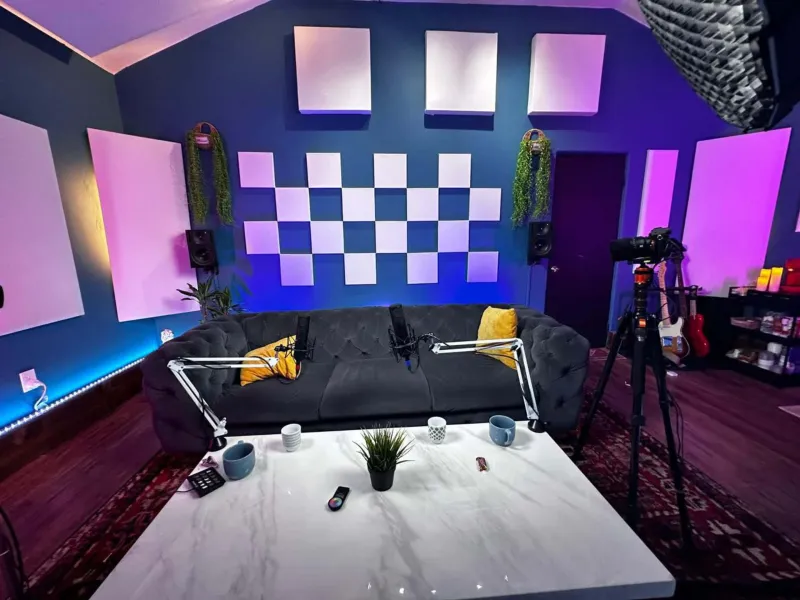
Photo: content creator recording podcast at night home studio dark ambient lighting, via img.peerspace.com
Jamila sets her upload timer for 1:47 AM every Tuesday. Not 1:45, not 2:00 — 1:47. She's tested it. The 28-year-old R&B producer and independent artist based in Atlanta has spent the better part of two years reverse-engineering the off-peak content window, and she'll tell you without hesitation that some of her biggest streaming weeks started while she was asleep and her music was quietly landing in algorithmic playlists nobody else was competing for.
"Everyone drops on Friday," she says. "That's what the labels do, that's what the blogs tell you to do. So I stopped doing that."
Jamila is part of a fast-growing community of independent creators — musicians, comedians, podcasters, YouTubers, TikTokers — who have turned the overnight hours into a deliberate competitive strategy. They're not night owls by accident. They're night owls by design.
The Logic of the Empty Feed
For most of the internet's existence, conventional wisdom pushed creators toward peak posting windows. Drop your content when the most eyeballs are online. Compete for attention during rush hour. The problem is, everyone got that memo.
Platforms like Spotify, YouTube, and TikTok run on a combination of direct audience engagement and algorithmic amplification. When you release content during peak hours, you're not just competing with other creators in your niche — you're competing with every piece of content the algorithm is actively promoting at that moment. The noise floor is deafening.
Off-peak hours flip that dynamic. Between midnight and 6 AM Eastern, content volume drops sharply while certain audience segments — night-shift workers, West Coast users, international listeners, chronic insomniacs — remain active. For a creator trying to get algorithmic traction, that's a smaller pond with hungrier fish.
"The algorithm doesn't sleep," explains Derek, a 33-year-old podcast producer in Chicago who runs three shows and schedules all of his episode releases between 11 PM and 4 AM. "It's constantly looking for content to push. If you drop something at 3 AM and it gets decent early engagement from the people who are up, the system can start moving it before the morning crowd even wakes up. By 9 AM, you've already got momentum."
Timing as a Creative Strategy
What makes the night-shift creator community interesting isn't just the scheduling — it's how deeply some of these people have thought about it. We're not talking about someone randomly hitting "publish" before bed. We're talking about creators who treat upload timing the way a stock trader treats market entry points.
Tony, a 25-year-old comedy video creator from Los Angeles with a growing YouTube following, keeps a spreadsheet tracking his video performance by day, hour, and the competitive content environment at time of upload. He's identified what he calls his "quiet windows" — specific overnight slots when his subscriber base has historically been most likely to engage within the first hour of a drop.
"That first-hour engagement is everything on YouTube," he says. "The algorithm looks at velocity. If I get 400 views in the first hour at 2 AM, that's actually more impressive to the system than 400 views in the first hour at 7 PM, because there's less total content competing at 2 AM. It punches above its weight."
This isn't a fringe theory. Several creator-economy researchers have noted that early engagement velocity — particularly on platforms like TikTok and YouTube — is one of the most important signals for algorithmic amplification. Anything that artificially inflates that velocity relative to the competition is worth examining.
The Human Side of the Graveyard Shift
Of course, building a content business around overnight releases comes with a lifestyle cost that's worth being honest about. Many of the creators in this space are working second jobs or managing families, which means their creative hours are genuinely the late-night ones — not because of strategy alone, but because that's all that's left.
Kira, a 31-year-old independent podcaster based in Nashville who covers true crime and regional history, records and edits almost exclusively between 10 PM and 2 AM after her kids are asleep. She started scheduling overnight releases out of necessity. The strategy part came later.
"I realized I was already up, I was already working, so why not make the timing work for me too?" she says. "I started looking at when my listeners were actually active, and a huge chunk of them are also night people — nurses, truck drivers, warehouse workers. They're listening at weird hours because that's their life. I'm releasing at weird hours because that's my life. It just... matched."
That audience-creator alignment is something the night-shift creator community talks about a lot. The theory is that off-peak creators naturally attract off-peak audiences, building a kind of parallel entertainment ecosystem that runs alongside the mainstream one — quieter, more loyal, and often more engaged.
The Economics of Being a 24/7 Business
For creators who have fully committed to the overnight strategy, the economics are genuinely compelling. Lower competition for algorithmic attention means a better return on the same amount of content. Early engagement from a core night-owl audience can generate the momentum that carries a piece of content through the following day's peak hours. And in some cases, international audiences in Europe and Asia — who are awake during US overnight hours — provide a built-in first-wave engagement pool that daytime-focused creators miss entirely.
"I have listeners in Germany and the UK who are basically my early adopters," Derek says. "When I drop at 3 AM Eastern, it's morning for them. They're commuting. They're the first wave. By the time Americans wake up, the episode already has hundreds of plays and the algorithm thinks it's hot."
Not every creator will find this approach fits their content or their life. But the night-shift creator movement is a real and growing part of the independent content economy — a community of people who looked at a 24-hour platform and asked a simple question: why is everyone fighting over the same eight hours?
Here at Rrota24, we've always believed entertainment doesn't have an off switch. Turns out, neither do the people making it.