Sleepless and Spending: How Streaming Giants Turned Your 3 AM Insomnia Into a Business Strategy

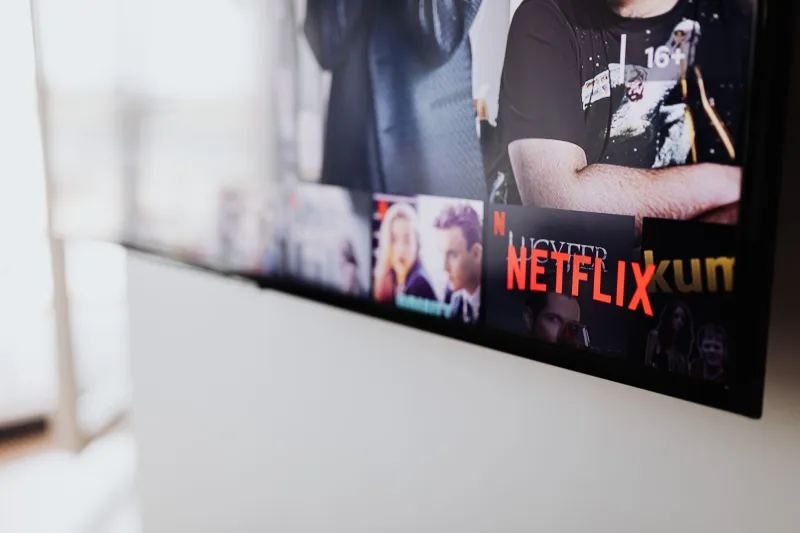
Photo by Photo by Michal Balog on Unsplash on Unsplash
There's a version of 3 AM that used to feel like no-man's-land — infomercials, reruns of shows nobody asked for, and the faint hum of a TV that was really just keeping someone company. That version is gone. What replaced it is something the entertainment industry spent years quietly building: a full-scale commercial ecosystem designed specifically for the hours when sleep won't come.
Insomnia, it turns out, is not just a sleep disorder. To the right data team, it's a demographic.
The Numbers That Changed Everything
The shift didn't happen overnight — even if it mostly operates overnight. For years, streaming platforms were collecting engagement data that told a story the industry wasn't quite ready to act on. Viewership didn't drop off a cliff at 11 PM the way traditional broadcast models assumed it would. Instead, there was a second surge. Somewhere between midnight and 4 AM, a meaningful slice of the American audience was actively watching, scrolling, and finishing entire seasons in single sittings.
According to internal data that platforms like Netflix and HBO Max have referenced in earnings calls and investor materials, late-night viewing accounts for a surprisingly substantial portion of total daily engagement — in some demographics, rivaling prime-time numbers. Night-shift workers alone represent tens of millions of Americans across healthcare, logistics, manufacturing, and service industries. Add in chronic insomniacs (roughly 30% of adults report occasional insomnia, with about 10% dealing with it chronically, per the American Academy of Sleep Medicine), and you've got an audience that's enormous, consistent, and — critically — captive.
Captive audiences spend money. That's not a moral judgment. It's just business.
Content Drops Timed to the Dark
One of the clearest signals that platforms are taking this seriously is the deliberate scheduling of content releases during off-hours. Netflix's practice of dropping entire seasons at midnight Pacific Time isn't just a West Coast convenience — it's a calculated move to capture the insomnia window across time zones simultaneously. East Coast viewers get their 3 AM drop. Midwest night owls get theirs at 2. And the algorithm is watching all of it in real time.
But it goes deeper than release timing. Platforms are increasingly tailoring what gets surfaced during late-night hours. The recommendation engine you interact with at 2:47 AM is not serving you the same slate it offered at 7 PM. True crime. Psychological thrillers. Low-stakes reality TV. Comfort rewatches. These genres spike dramatically in late-night engagement data, and the algorithm has learned to lean into that, feeding the loop rather than disrupting it.
Some platforms have even begun experimenting with notification timing — pushing alerts for new episode drops or personalized "you might like" suggestions specifically during the windows when a user's historical data suggests they're most likely to be awake and idle. It's not accidental. It's engineered.
The Production Side Is Catching Up
Streaming platforms figured this out first because they had the data. But production studios are now restructuring around the same insight. The rise of shorter-form content — 20-minute episodes, limited series with tight episode counts, documentary shorts — is partly a response to the late-night consumption pattern. Nobody's starting a three-hour prestige drama at 1:30 AM. But they'll absolutely start a six-episode limited series and tell themselves they'll stop after two.
Spoiler: they don't stop after two.
Independent creators on YouTube, TikTok, and Spotify have been ahead of this curve for a while. The podcast industry, in particular, has long known that late-night listening is a massive segment of its audience. Sleep-adjacent content — meditation, ASMR, ambient storytelling — has exploded into its own genre category, generating millions in ad revenue from brands that specifically want to reach the awake-at-odd-hours crowd. Casper mattresses didn't accidentally become a podcast sponsor phenomenon. That was strategy.
Advertisers Are Paying Attention
Here's where it gets really interesting from a business standpoint: advertisers are starting to follow. For decades, late-night ad inventory was the bargain bin of media buying — cheap slots filled with local car dealerships and 1-800 number pitches. That's changing.
Brands targeting specific demographics — healthcare products, food delivery apps, financial services aimed at working adults — are now actively competing for late-night digital inventory. DoorDash and Uber Eats have openly discussed optimizing their ad spend toward late-night windows because, logically, hungry people who are awake at midnight are more likely to place an order than someone watching TV at 6 PM after dinner.
The CPM rates (cost per thousand impressions) for late-night streaming slots have risen noticeably over the past three years, according to media buying analysts. What was once dead air is now premium real estate for the right product category.
What This Means for the Rest of Us
If you're someone who finds yourself falling down a streaming rabbit hole at 2 AM on a Tuesday, it's worth knowing that the experience wasn't accidental. The content was chosen for you. The notification arrived when it did for a reason. The next episode loaded automatically because someone, somewhere, ran the numbers and decided that autoplay at midnight converts better than autoplay at noon.
None of that makes the content less enjoyable. But it does reframe the relationship a little. You're not just a viewer with insomnia. You're a market segment with purchasing power, and a pretty lucrative one at that.
The entertainment industry has always followed the eyeballs. It just took a while to realize that a whole lot of eyeballs never actually close.
The Clock Never Stops
At Rrota24, we talk a lot about entertainment being a round-the-clock machine — because it genuinely is. The content cycle doesn't pause at midnight. The data collection doesn't take a break. And the business decisions being made in boardrooms right now are increasingly shaped by what people like you are watching during the hours when the rest of the world is supposedly asleep.
Insomnia used to be something people apologized for. Now it's something platforms quietly count on. Whether that's a comfort or a concern probably depends on how you feel about your last 3 AM binge session — and whether you're ready to admit that it was never entirely your idea.