Strange Picks and Hidden Gems: What Really Happens to Your Streaming Feed After Midnight

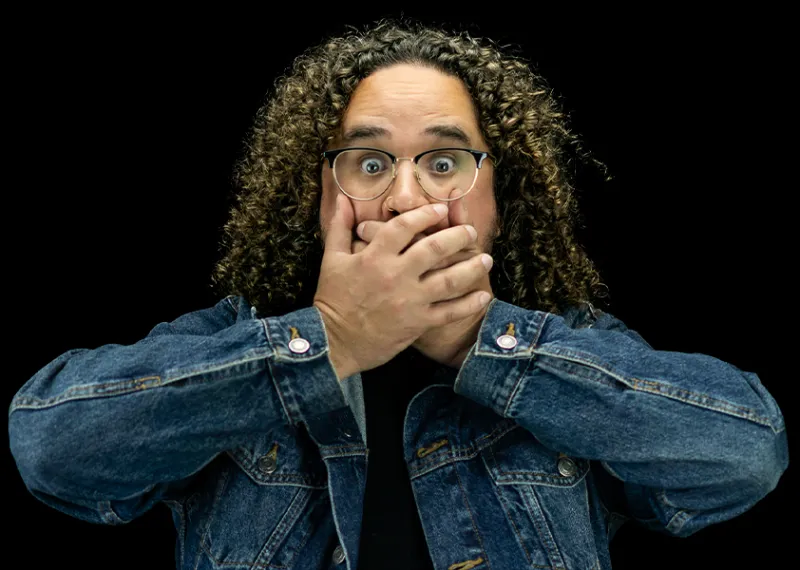
Photo: Susanne Nilsson from Trelleborg, Sweden, CC BY-SA 2.0, via Wikimedia Commons
It's 2:17 AM. You've already finished the show you meant to watch, you're three episodes deep into something you never planned on starting, and your home screen is now suggesting a 2003 Finnish documentary about competitive woodcutting. You don't speak Finnish. You have never expressed any interest in woodcutting. And yet — you're curious.
Welcome to the 2 AM algorithm. It's a real thing, it has a real explanation, and it might be responsible for some of the best content you've ever accidentally discovered.
The Algorithm Doesn't Sleep — But It Does Shift
Here's the thing most people don't realize: streaming recommendation engines aren't static. They're constantly recalibrating based on what the entire user base is doing at any given moment. During peak hours — roughly 7 PM to 11 PM Eastern — the system is pulling from an enormous pool of behavioral data. Tens of millions of people are clicking, skipping, pausing, and finishing content all at once. The recommendations you see during those hours are essentially consensus picks, tuned to what works for the broadest possible audience.
After midnight, that pool shrinks dramatically. The signal gets quieter. And that's where things get interesting.
"Late-night users are a self-selected group," explains one data scientist who works on recommendation systems at a major streaming platform and asked to remain anonymous because they weren't authorized to speak publicly. "They tend to be more adventurous, more tolerant of ambiguity, and they watch things to completion at a higher rate than daytime viewers. The model picks up on that and starts surfacing content that wouldn't survive the 8 PM crowd."
In other words, the algorithm isn't getting weird because it's tired. It's getting weird because you are, statistically speaking, more open to weird things — and the system knows it.
Real People, Real 3 AM Rabbit Holes
Ask anyone who regularly stays up past 2 AM with a remote in hand and they'll have a story. Marcus, a 34-year-old nurse in Chicago who works night shifts, says his entire taste in film changed because of a single late-night recommendation. "I got suggested this obscure 1970s Brazilian thriller. I don't even remember what I was watching before it. But I watched the whole thing, then watched everything else by that director, and now Brazilian cinema is legitimately one of my favorite things."
Then there's Priya, a grad student in Austin who describes her 3 AM feed as "a different app entirely." During the day, she gets pushed toward prestige drama and popular documentaries. "But late at night it's like the algorithm finally stops trying to impress me and just... shows me things. I found this entire genre of slow-burn Scandinavian thrillers I'm obsessed with now. I never would have clicked on them at 7 PM."
These aren't isolated stories. They're patterns — and the platforms know about them.
The Science Behind Your Sleepy Choices
There's a cognitive component to this that goes beyond the algorithm itself. Sleep deprivation and late-night fatigue lower what psychologists call "cognitive load tolerance" — basically, your brain gets lazier about filtering out unfamiliar things. During the day, you might scroll past a title that looks too foreign or too niche. At 2 AM, that same title feels like less of a commitment. You click. You watch. You're hooked.
Researchers studying media consumption have noted that late-night viewers exhibit what some call "low-stakes curiosity" — a willingness to try things precisely because the stakes feel low. Nobody's watching you. There's no social performance involved in what you pick. It's just you and the screen.
This psychological openness, combined with an algorithm that's now working with a narrower, more adventurous user base, creates a kind of feedback loop. The recommendations get bolder. Your acceptance rate goes up. The model learns. Your profile quietly shifts.
Is the "Late-Night Discovery Effect" Real or Just Good Marketing?
Some skeptics — including a few media researchers — argue that platforms have a vested interest in romanticizing late-night discovery. If users believe the algorithm is doing something magical after midnight, they're more likely to stay on the app longer, which serves the platform's engagement metrics regardless of what they're actually watching.
"There's definitely a narrative being sold," one media studies professor told us. "The idea that the algorithm 'unlocks' at night is a compelling story. But the more mundane explanation is that exhausted people have lower resistance to clicking on things, and platforms benefit from that regardless of whether the content is actually a better match."
Fair point. But the two explanations aren't mutually exclusive. The algorithm can be genuinely surfacing underserved content and platforms can be benefiting from your tired, click-happy state. Both things are true at 2 AM.
What This Means for How You Watch
If you're someone who only streams during prime time, you might genuinely be missing a different tier of your own recommendations. The content that gets pushed to the top of your home screen at 9 PM is optimized for broad appeal and completion rates across a massive audience. It's not necessarily the content that fits you most specifically.
The late-night feed, for all its randomness, is working with a more refined version of your behavioral history — and fewer competing signals from the general population.
So the next time you're up at 2 AM and your streaming app suggests something that makes absolutely no sense on paper, maybe give it ten minutes. Your algorithm is running a different program. And based on the stories we've heard, it might just know something your daytime self doesn't.
Rrota24 is here around the clock for a reason — because the best entertainment moments don't wait for a reasonable hour. Neither does the algorithm, apparently.