City Never Sleeps, City Always Streams: How America's Wildest Night Cultures Are Quietly Reshaping Hollywood
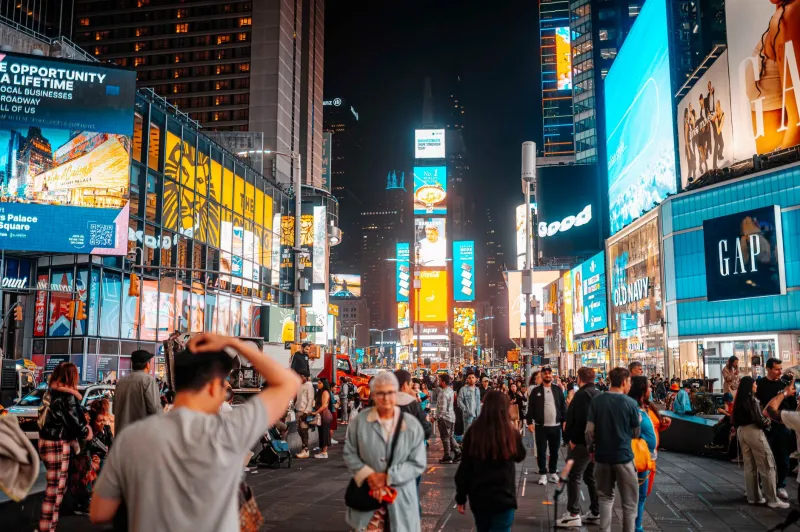
Picture this: it's 1:47 AM on a Tuesday. In Las Vegas, a cocktail waitress finishing her shift cracks open a crime drama on her phone before her ride even pulls up. In Miami, a group of friends just back from Wynwood are half-watching a reality competition show while scrolling through highlights on their second screens. In New York, a Bushwick bartender is three episodes deep into a foreign-language thriller, fully awake, fully invested. In Los Angeles, a session musician who just wrapped a late studio session is queuing up a music documentary before midnight even registers as late.
These aren't outliers. These are patterns — and the platforms tracking them know it better than anyone.
The entertainment economy has always been national on paper, but it's always been deeply local in practice. And right now, the cities that never fully shut down are handing Hollywood some of its most valuable real-time data.
Why Geography Still Matters in a Streaming World
It's easy to assume that streaming erased the map. After all, a show drops everywhere at once, right? Technically, yes. But viewing behavior doesn't flatten just because access does. People in different cities live on wildly different schedules, and those schedules create distinct consumption windows that platforms have gotten very good at reading.
Time zones are just the beginning. A three-hour gap between New York and Los Angeles means that a Thursday night drop lands at 9 PM for East Coasters and 6 PM for Angelenos — two completely different emotional contexts for starting a new series. But beyond the clock, it's the culture of a city's nightlife that really shapes what gets watched and when.
Las Vegas, for instance, operates on a schedule that barely resembles the rest of the country. Shift workers, hospitality staff, and tourists from every time zone create a viewing audience that's genuinely active at hours most cities have gone quiet. Platforms have noticed. Engagement spikes in Las Vegas metro zip codes during windows that would register as dead air almost anywhere else.
New York's Midnight Market
New York has always had an outsized influence on culture, and its relationship with late-night entertainment is no different. The city's sheer density of service workers, creative professionals, and night-shift commuters means there's a legitimate prime-time audience operating between 11 PM and 2 AM that rivals what some mid-sized markets produce during conventional evening hours.
That audience skews toward prestige drama, true crime, and sharp comedy — content that rewards attention rather than just filling background noise. New York viewers watching late aren't passively consuming; they're actively choosing. That behavior pattern signals something important to recommendation algorithms: this is a high-intent audience, and keeping them engaged has outsized value.
Content creators and publicists who know this have started timing social drops and trailer releases to catch New York's late-night scroll window, knowing that early engagement from that market tends to generate the kind of organic conversation that spreads nationally by morning.
Miami's Bilingual, Bi-Cultural Stream
Miami brings a completely different dimension to the equation. The city's large Latin American population means that entertainment consumption here frequently crosses language lines in ways that most American cities simply don't. A viewer in Miami might watch an English-language procedural, then flip to a Spanish-language telenovela, then catch a reggaeton artist's YouTube documentary — all in the same evening.
This fluidity has made Miami one of the most strategically important cities for platforms trying to crack bilingual content strategy. Shows that perform well in Miami late at night often signal broader cross-cultural appeal before any formal market research confirms it. The city essentially functions as an early-warning system for content that can travel across demographic lines.
Regional celebrity culture reflects this too. Artists and personalities who trend in Miami nightlife — particularly in the music and fashion space — often have a head start on national recognition that other markets catch up to weeks later.
Los Angeles: The Insider Audience That Talks
LA is a different beast entirely, and not just because it anchors the West Coast's time zone advantage. The city is home to an enormous population of entertainment industry workers — writers, producers, agents, assistants, crew — who watch everything with a professional eye and talk about it constantly.
Late-night viewing in LA carries a specific social currency. Being ahead of a trend, having watched something before it blows up, matters in a city where industry conversation never really stops. That creates an audience that's not just consuming content — it's evaluating it, discussing it, and amplifying it through professional networks that have direct lines to decision-makers.
When something pops in LA late-night viewing data, it doesn't just register as a ratings bump. It circulates through industry circles in ways that can accelerate a show's profile, trigger renewal conversations, or push a creator's next pitch to the top of a development slate.
How This Shapes What Actually Gets Greenlit
Here's where it gets really interesting. Platforms aren't just passively collecting this geographic data — they're actively using it to inform development decisions. A concept that resonates with New York's late-night prestige crowd and Miami's bilingual audience simultaneously is a very different pitch than one that only performs in suburban prime-time windows.
The cities that never sleep are essentially functioning as test markets that run continuously, without anyone formally announcing that a test is underway. Viewing habits in Las Vegas at 3 AM, Miami at midnight, New York at 1 AM, and LA at 11 PM are all feeding into the same machine — one that's trying to figure out what the next big thing looks like before it's officially the next big thing.
Regional trending also influences casting and promotional strategy. A celebrity who organically dominates late-night social conversation in two or three of these major markets is a very different asset than one who only performs in scheduled promotional windows. Talent managers and publicists are increasingly aware of this, which is why you'll notice certain stars making very deliberate appearances in specific city markets before a major project drops.
The Rotation Never Stops
What all of this adds up to is a 24-hour entertainment economy that's more geographically textured than it might appear on the surface. The platforms want you to think of streaming as borderless and timeless — always available, always personal. And it is. But the data underneath it is deeply tied to place, to local rhythms, to the specific reasons why certain cities just don't go to sleep.
For viewers, this is mostly invisible. You're just watching what you want, when you want it. But for the industry reading your habits in real time, your city's nightlife is a signal — one that travels up the chain faster than you'd probably expect.
So the next time you're up past midnight in New York, Miami, Vegas, or LA, queuing up something new — just know that somewhere, an algorithm is very glad you're still awake.